NEWS
Religious and traditional leaders in Lomé commit to advancing the rights and future of girls and women
06 October 2026

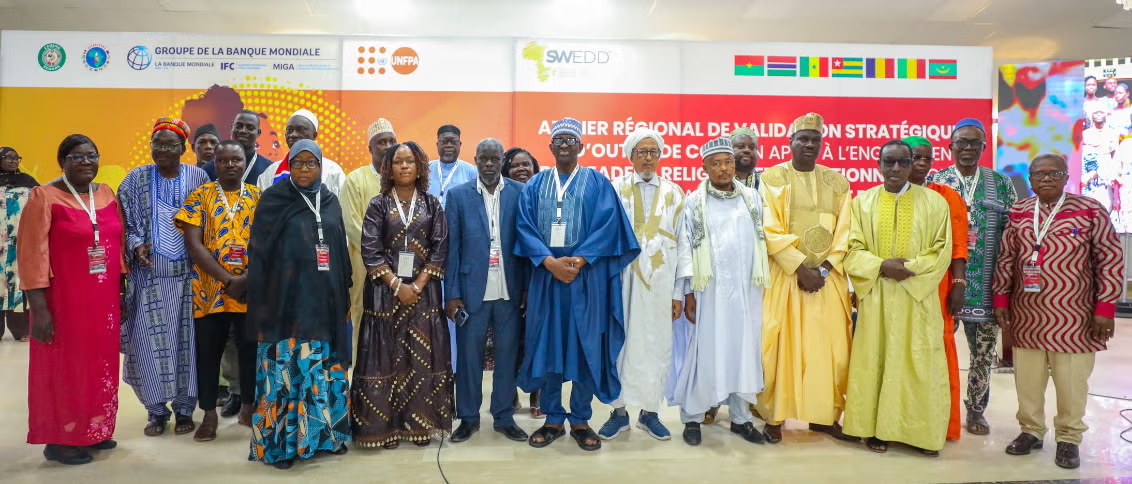
As trusted advisors, spiritual guides, and traditional authorities, religious and traditional leaders can influence the decisions that shape the lives of girls and women. Their commitment is essential to changing social norms, supporting school enrollment, preventing violence, and promoting access to health care and economic opportunities. Gathered in Lomé from September 28 to October 1, 2026, more than twenty leaders from five SWEDD+ countries worked together to develop messages tailored to their communities and reaffirmed their commitments in the Lomé Declaration.
Hailing from Burkina Faso, The Gambia, Mauritania, Senegal, Chad, and Togo, the participants brought their experiences and an understanding of community realities. In their places of worship, at ceremonies, and in their interactions with families, they are regularly called upon to advise, mediate, and provide support. This close connection gives them a special responsibility to open a dialogue about practices that limit choices
“Your voice saves lives,” Élise Kakam, UNFPA Resident Representative in Togo, told them at the workshop’s opening. This statement sums up the purpose of the meeting: to mobilize an authority that is already present in families’ lives to support the health, protection, and future of girls and women.

When convictions open the way to dialogue
How can we encourage parents to keep their daughters in school? How can we challenge child marriage or support a woman’s right to work? For four days, these questions were at the heart of the ‘Regional Workshop on the Strategic Validation of Communication Tools for Social and Behavioural Change in Support of Religious and Traditional Leaders’ Commitment to the Empowerment of Girls and Women’.
For Imam Youssouf Diagana, imam of the Grand Mosque of Kaédi and president of the Regional Federation of Imams in Mauritania, a key first step is to distinguish between religious teachings and practices that hold girls back. “Islam does not forbid girls from going to school,” he points out.

This distinction is important when families cite tradition or religion to justify a break from education. It enables leaders to engage in a discussion using references that their audience knows and respects.
In Senegal, Father Pierre Latyr Bakhoum, a priest of the Archdiocese of Dakar and chaplain supporting youth movements and associations, sees this responsibility as a matter of defending the dignity of every person. “The role of the religious leader in raising awareness of gender equality consists precisely in reaffirming human dignity,” he explains.
Testimonials from other leaders during the workshop have also shown that this commitment sometimes requires long-term support. Blandine Pénifaï, a teacher and general secretary of the Alliance of Evangelical Women of Burkina Faso, describes the work carried out with families. “Just because a girl is pregnant does not mean she should be rejected,” she insists.
She talks about discussions with parents, the support provided to the young girl and preparations for her return to school. In such situations, a female religious leader’s ability to maintain dialogue can be crucial to the girl’s ability to continue her education.
An influence that can translate into action
Beyond mere messages, some authorities have concrete means of taking action. In Burkina Faso, the Baloum Naaba of Tampouy describes the role of traditional leaders in ensuring women’s access to resources. “In practical terms, we raise awareness amongst the leaders so that they grant land to women so they can farm,” he explains.
Access to a plot of land can enable women to grow crops, sell their harvest and earn an income. This account links the discussion on social norms to the material conditions of autonomy.
The discussions in Lomé focused on this connection: how can rhetoric in favour of women’s education, health or employment be accompanied by decisions that actually enable them to make progress?

A partnership to support work in the countries
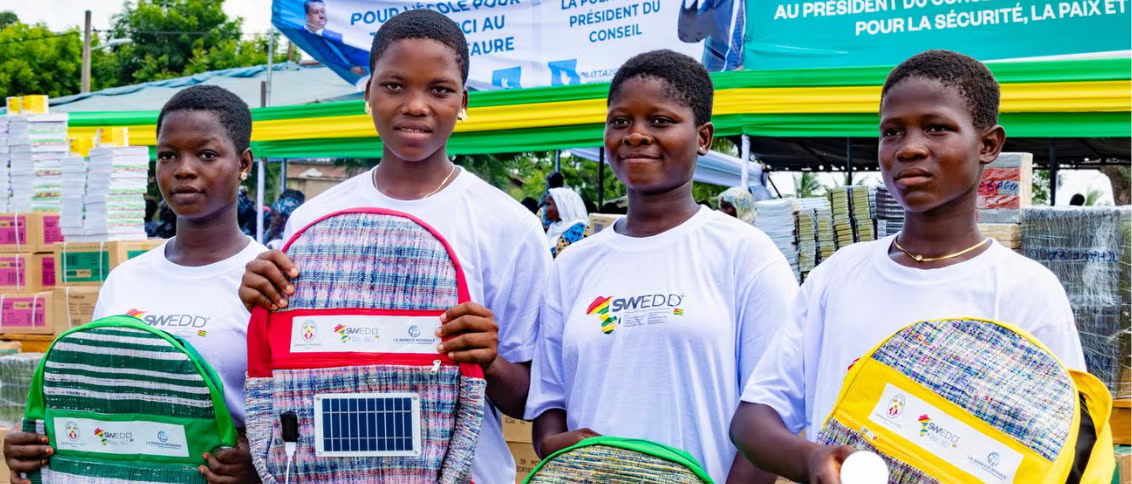
The regional workshop on the strategic validation of communication tools for social and behavioural change forms part of the SWEDD+ project, funded by the World Bank, with technical assistance from UNFPA and in partnership with the West African Health Organisation (WAHO).
It was organised by the Regional Technical Secretariat, together with SWEDD+ Togo and the UNFPA country office, in collaboration with the governments and project management units of the participating countries, and with technical support from CEFA-PSD.

Since the launch of the SWEDD project in 2015 – which is now being continued and expanded through SWEDD+ – UNFPA has been providing technical assistance to participating countries at both national and regional levels. Communication for social and behavioural change forms part of this support: it aims to gain a better understanding of the barriers faced by girls and women and to support responses tailored to local realities.
In Lomé, this work has drawn on the regional strategy and tools of the ‘Together for Her’ movement. The project teams provided the objectives, data and protection issues. Community leaders contributed their knowledge of the communities, their beliefs and the words that can spark a conversation.


Finding the right words and preparing how to use them
In groups representing Muslim, Christian and traditional communities, the participants worked on five themes: economic empowerment, keeping girls in school, gender-based violence and harmful practices, sexual and reproductive health, and positive masculinity.

They examined the perceptions that hinder empowerment, then developed messages based on their experiences and points of reference. The plenary sessions provided an opportunity to compare proposals across countries and traditions.
A legal panel discussed frameworks for the protection of girls and women, as well as collaboration between legal professionals and community leaders. A presentation by the UNFPA office in Senegal on positive masculinity also opened up a discussion on the sharing of family responsibilities, the prevention of violence, and the support that men and boys can provide for women’s aspirations.
The jointly developed messages are intended to be adapted to local languages and contexts, and then used in sermons, ceremonies and community dialogues. Their impact will depend on how leaders bring them to life, working alongside the project’s national teams and their partners.

From Lomé to the communities
The Lomé Declaration, dated 1 October 2026, sets out the commitments made at the conclusion of the meeting. In it, the leaders affirm their determination to promote education, economic opportunities and the participation of girls and women in decisions that affect them.
They also commit to supporting their sexual and reproductive health, ending violence and harmful practices — notably child marriage and female genital mutilation — and promoting positive masculinity.
The declaration provides for the roll-out of messages co-created as part of the ‘Together for Her’ initiative, the mobilisation of other leaders, and the presentation of actions at regional reviews. A regional platform is to facilitate the sharing of experiences and mutual support between countries.

The signatories also call on governments to implement protective legal frameworks, on technical and financial partners to support community-led initiatives, and on the media, young people and communities to play their part in this process.
After four days of work, the participants leave with key messages and a shared sense of responsibility. The next steps will be taken through conversations with families, advice given to parents and decisions made within communities – wherever their words can help a girl continue her education, a woman access healthcare or build her independence.